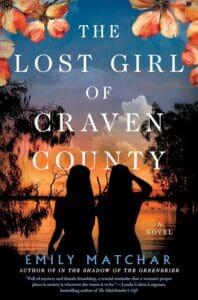
The Lost Girl of Craven County by Emily Matchar
ARC from Putnam books and Netgalley for an honest review
Book Blurb:
A decade into the Great Depression, Millicent Green is a twenty-five-year-old “old maid” living with her marriage-obsessed mother and domineering older brother in the stiflingly small Jewish community of New Bern, North Carolina. Smart and prickly, she’s struggling to find her place in the world following the loss of her beloved younger brother, and with him, her dreams for the future.
One humid August day, Millie is sent to run an errand and discovers a young woman unconscious on the ground. This mystery woman, mute and without identification, will upend Millie’s life. Together, they set out on a quest that will lay bare some of the twentieth century’s most shameful episodes. From a historic river town to the hinterlands of rural North Carolina, The Lost Girl of Craven County delves into the impossibility of burying secrets forever. It’s a story of love, loss, and—above all—the indelible, world-moving power of female friendship.
My Review: 4 stars
The Lost Girls of Craven County by Emily Matchar was a quick and cozy mystery that I really enjoyed. I loved the Jewish representation and the great cast of characters.
The main character, Millie, is completely misunderstood. She’s considered an old maid at twenty-five and called crazy by many after her brother’s death causes her to have a nervous breakdown. When she finds an unconscious and injured woman at the pickle factory that her family owns, she miraculously gets her home. The real problem is that the woman doesn’t speak. Millie’s family thinks she can understand what’s being said, but they cannot reliably communicate with her.
This sparks Millie on a mission to find out who she is, why she’s in New Bern, North Carolina -a small town full of Jewish people and can return her to wherever her people are. Through smart and thorough investigations, Millie gets closer and closer to understanding.
The second half of the book follows the stranger’s life, and the reader gets to understand what happened to her. It’s a grim storyline but wholly realistic as the orphan “school” she was sent to was practicing eugenics on the girls.
I was thoroughly invested in this compact mystery and found it to be educational and thoughtful.
Quotes I liked:
If only. If only. If only. Two most useless words in the English language.”